Sunday, September 11, 2005

Tono Crew Conquers Mount Ena

At 2190 meters, Mount Ena is listed as one of the top 100 hikes in Japan. (The view from near my apartment last spring).

Image hosted by Photobucket.com
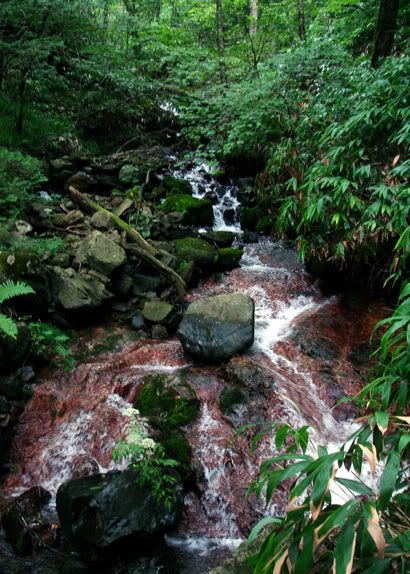
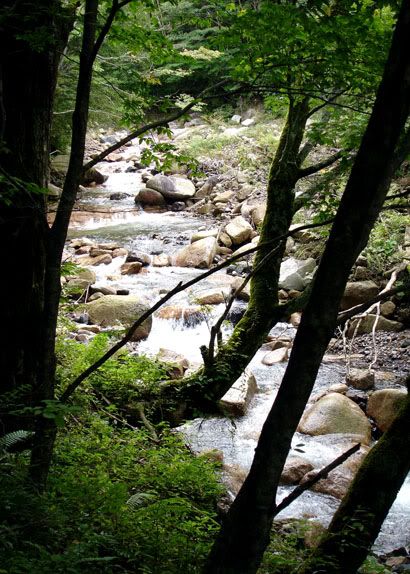
Following the Nakatsugawa river back to its source...

Image hosted by Photobucket.com

Image hosted by Photobucket.com
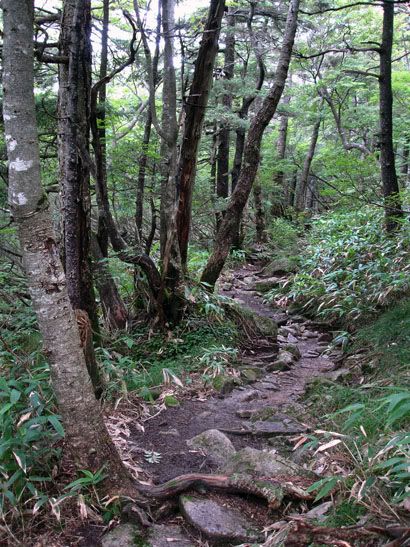
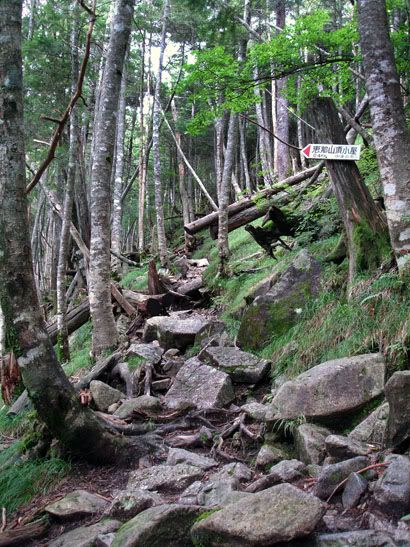
The narrow trail winds its way through thick, green vegetation.

Image hosted by Photobucket.com
What trail, you ask?

Image hosted by Photobucket.com
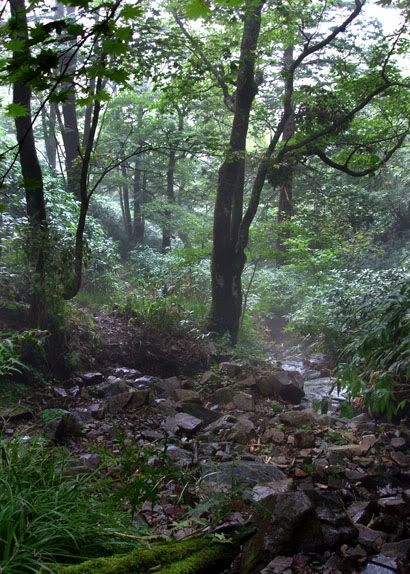
Just follow the slippery, moss covered rocks uphill for, oh, let's say 2,189 meters!

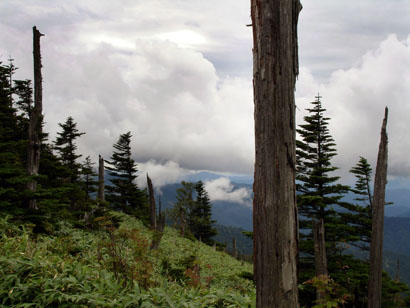
Along the way, don't forget to stop and smell the fungi!


Image hosted by Photobucket.com
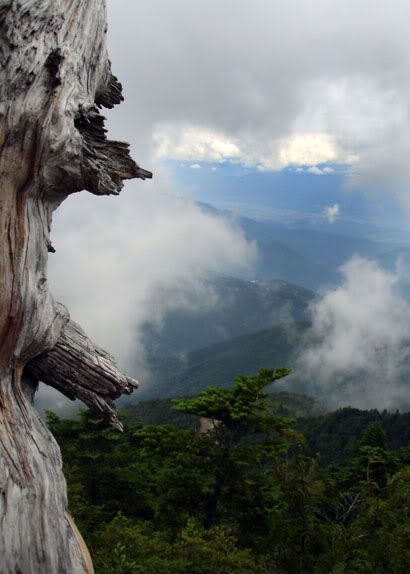
The view from the summit, after 3 and 1/2 hours of hardcore hiking. Somewhere, tucked beneath the folds of those mountains, is my home.

Image hosted by Photobucket.com
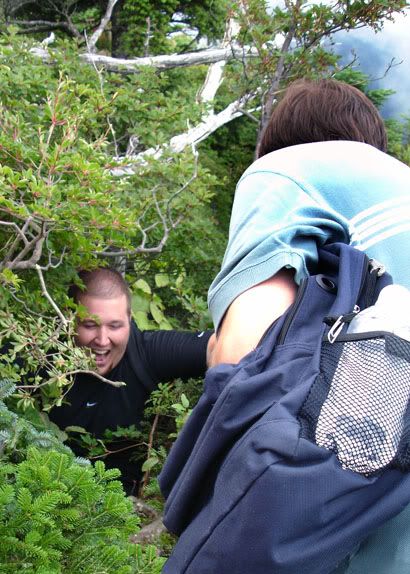
J looks remarkably excited about the prospect of sliding down Ena on his oshiri as he slips over the edge.

The tough kids who climbed Mount Ena, and lived to tell the tale.

Thursday, September 8, 2005

A Walk in the Rice

Ena's emerald waves of grain cover the foot of the mountains like an old, patchwork quilt from Gee’s bend.

A friend, who shall remain nameless, requested that I take a few pictures of my surroundings (obviously he does not appreciate my obsession with Geisha). Since I've had Kuruma-chan (my beloved car), my rice feild wanderings have significantly decreased, which is an absolute travesty! I decided to rectify the situation by reaquainting myself with the country side through which I so often meandered when I first arrived in Ena.

Image hosted by Photobucket.com
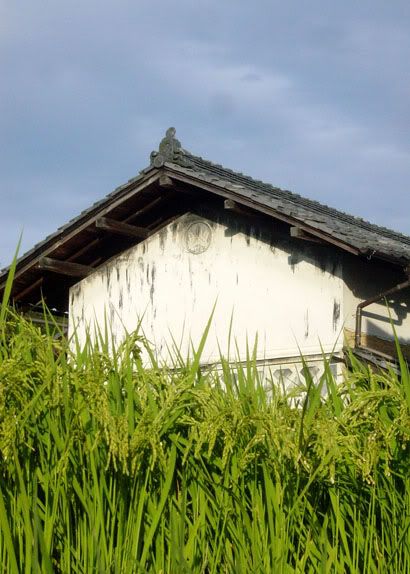
Ena's countryside is dotted with Edo period store houses, built separate from the main house to protect family heirlooms and valuables from fire.

Back at home in the states, I remember smelling winter on the autumn winds, shuddering with the brightly colored leaves. In Japan, it is the mouth-watering aroma of autumn, wafting from rice field to rice field that I look forward to during the long summer months. Imagine the sweet smell of popcorn mingled with the fresh scent of summer rain and the smoke of a campfire; the sound of water flowing down from the mountains into moats encircling each emerald patch; pine covered mountains, rising like islands from the steady waves of wind-blown rice; dragonflies hovering over swaying stalks, heavy with the year's harvest, as butterflies dance to the chorus of chirping insects and burping frogs. As autumn draws near, the smell of the rice begins to hang so thick in the air you can almost taste it. 美味しそう!

Tuesday, September 6, 2005

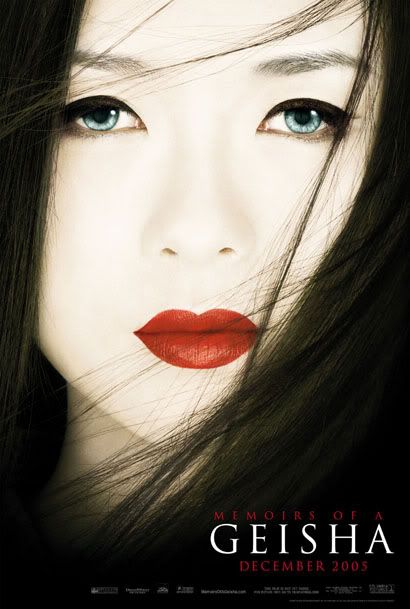
Memoirs of a Geisha: Gion, Hollywood Style

Image hosted by Photobucket.com


Watch the Memoirs of Geisha trailor by clicking here!


I have quite a bit to say about this movie...I'll write about it tomorrow! In the meantime, you can compare what you've seen here to what you will see in a theatre near you soon!

Sunday, September 4, 2005

The Girls of Gion

A crew of Geiko and Maiko gathered outside the famous noren of the Ichirikiya to cheer the men on as they carried portable shrines down the Hanamikoji (Gion Matsuri).

Thursday, September 1, 2005

Samurai-Style: The 47 Ronin

Image hosted by Photobucket.com
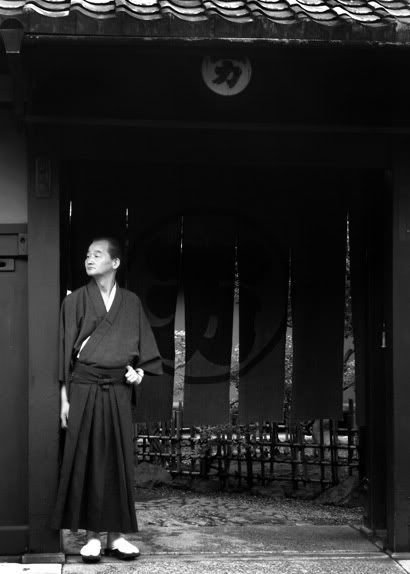
Behind the gate of the Ichirikiya, the world of old Japan lives on.


Among flowers, the cherry blossom;
Among men, the Samunrai.
Japanese Proverb


The fame of the Ichirikiya, Japan's most renowned teahouse (a place where Geisha entertain) has nothing to do with "Memoirs of a Geisha," the fictional fairytale still largely unknown in the land where it purports to takes place. Instead, its everlasting honor and ultimate preeminence comes from its part in Japan's national legend: The historic tale of the 47 Ronin, or masterless samurai. (The kanji for Ronin

 浪人 actually means drifter, as in one who is tossed about as the waves in the sea).

The story of the 47 Ronin is one of the most celebrated in the history of the samurai. This was perhaps all the more so because it occurred at a time when the samurai class was struggling to maintain a sense of it’s self - warriors with no war, a social class without a function. Over time, the story became a symbol of loyalty to one's master, and later (especially during WWII), of loyalty to the Emperor.
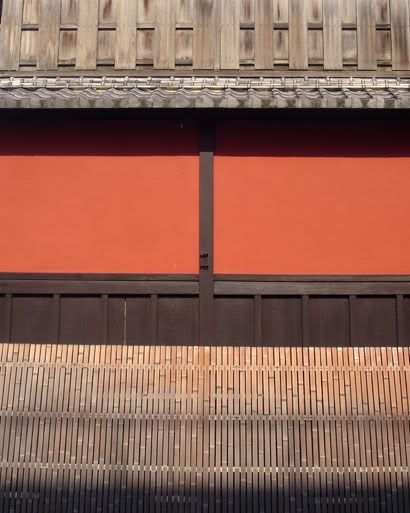

Image hosted by Photobucket.com

The bright red walls of the Ichirikiya, which concealed the leader of the 47 ronin.

The fateful series of events began to unfold in 1701, when the young daimyo of Ako was instructed to receive the emperor's envoys as they paid respect to the Shogunate. In order to properly perform this duty, he was placed under the tutelage of a corrupt, yet powerful, official in the hierarchy of the Tokugawa Shogunate: Kira Kouzukenosuke. Angry that Ako ha not seen fit to offer a bribe for his services, Kira verbally abused Ako, insulting and humiliating him in public while refusing to teach him proper court protocols. Finally during a meeting at Edo Castle, Kira told Ako he was a poor country boor with no manners. Ako lost his temper, drew his short sword and struck Kira, wounding his face. The second swing of his sword missed and hit a pillar.

Kira's survived, but the attack on a shogun official within the Edo palace, where any kind of violence, even drawing a sword, was forbidden, was a serious offense. Ako was forced to commit Seppuku of hara-kiri, ritual suicide, the very same day, with a decree that revenge taken on Kira was strictly forbidden. Of Ako's more than 300 men, 47 refused to obey and made a secret oath to avenge the death of their master and accept their fate.

Kira, however, was no fool, and expecting retaliation from Ako's samurai, fortified his residence under heavy guard. To quell the suspicions of the Shugunate and Kira, the 47 ronin spilt up and became tradesmen, monks, and in Oishi's case (their leader), playboys. He moved to Kyoto and commenced to party it up like it was 1799, seeking refuge from spies in the exclusive Ichirikiya in between brothel and tavern visits.
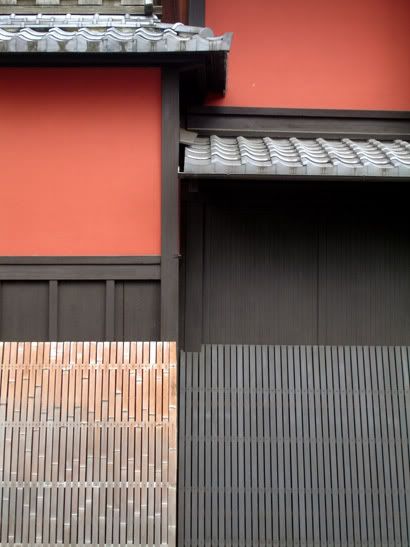

Image hosted by Photobucket.com


Drunk and stumbling home one night, Oishi fell down in the street and passed out. Onlookers laughed, and one Satsuma man, so infuriated by his 'conduct unbecoming of a samurai insulted him for his lack of courage in failing to avenge his master's death, kicked him in the face and spat on him (to even touch the face of a samurai was a great insult, let alone kick it). Soon after, concerned that her husband was taking the act too far, his faithful wife of 20 years questioned his behavior. He divorced her on the spot and bought a beautiful concubine to take her place

When word of this reached Kira, he became convinced that he was no longer in danger. When he began to relax his guard, the rest of the ronin gathered in Edo. As workmen and merchants, some of them were able to gain access to Kira's house, familiarizing themselves with its layout and the character of those who guarded it. One of them even married the daughter of the house architect in order to obtain plans while others secured arms sent them to Edo.

When the necessary preparations were made and Oishi was convinced that they could catch Kira off his guard, he fled Kyoto to the secret meeting spot in Edo, where they renewed their vow of vengeance. On the morning of December 15, 1702, under the cloak of a heavily falling snow, Oishi and his son led the attack on Kira's estate.
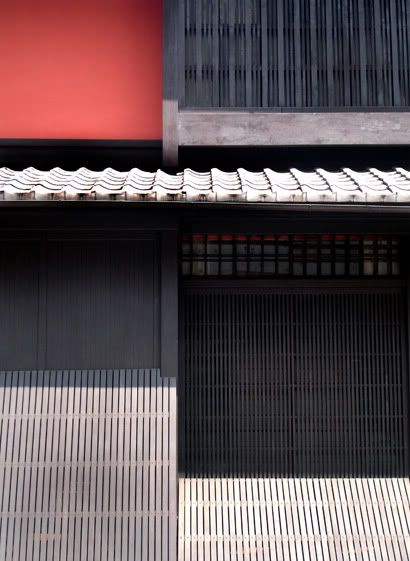

Image hosted by Photobucket.com


At their last supper, the men had agreed that they would cut off Kira's head and offer it at the tomb of their master before turning themselves in to face their deaths. Oishi also asked that they take care to spare the women, children and helpless people in the attack. After breaking thru the guard at the Kira's gate, he even sent messengers to the neighboring houses, explaining that they had not come as thieves but as retainers out to revenge the death of their master, promising bring them no harm. In their hatred for Kira, the neighbors did nothing

After a fierce battle with Kira's men, Kira himself was no where to be found. Oishi checked his bed, the warmth of which promised he could not be far. In their search they discovered the entrance to a secret courtyard hid behind a large scroll. Hiding in a storage building they found a man who refused to disclose his identity. Under the light of a lantern the scar on his head from Ako's attack betrayed him, making it clear to the men that it was indeed Kira .

In a show of respect for Kira's high rank, Oishi got down on his knees and respectfully addressed him, announcing that they were retainers of Asano, come to fulfil their duty by avenge his death. Handing Kira the same dagger Ako had committed Seppuku with, he invited Kira to die as a true samurai, taking his own life. He even offered to act as a second (as portrayed in Algren's first encounter with 'The Last Samurai', when he cuts off the head of his friend after he commits seppuku), but Kira was speechless, trembling with fear. Finally Ōishi ordered the others to hold him down as he cut off his head with Ako's dagger. Extinguishing the lamps and fires in the house (lest any cause the house to catch fire, and start a general fire that would harm the neighbours), they sent out for the grave of their master, carrying Kira's bloody head, while the youngest ronin was ordered to travel to Akō and inform them that their revenge had been completed. Along the way they were praised by the common people for their courage.

At the temple, they cleaned Kira's head in a well, laying it and Ako's dagger before his tomb. After praying, they left all their money to the abbot, asking for a proper burial before turning themselves in.

Although the ronin had followed the precepts of bushido (the way of the warrior) by avenging their lord, they had also undermined the authority of the shogunate, which had forbidden their revenge. On Febuary 4, 1703, the shogunate graciously allowed the 46 men to commit Seppuku rather than be executed as criminal. A truly happy ending, by Japanese standards.

The forty-seventh ronin eventually returned from his mission, and was pardoned by the Shogun, perhaps because of his youth. He lived to be seventy-eight, and was then buried with his comrades and his lord at Sengakuji. The clothes and arms they wore are still preserved in the temple to this day, along with the drum and whistle used in the attack. (Their armor had been home in order not to arouse suspicion by buying it).

The tombs became a place of great veneration, and people flocked there to pray. One of those who came was a Satsuma man, the same one who had mocked and spat on Ōishi as he lay drunk in the street. Addressing the grave, he begged for forgiveness for his actions, and for thinking that Ōishi was not a true samurai. He then committed seppuku, and was buried next to the graves of the ronin, who many feel were the finest examples of samurai loyalty to emerge from the Edo Period.
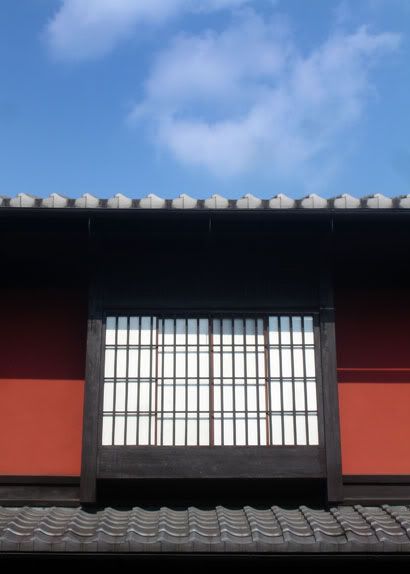
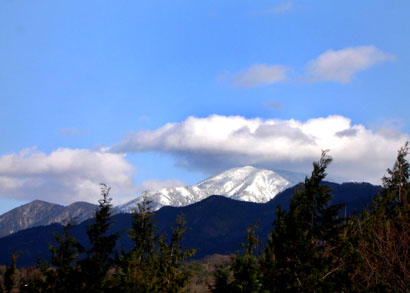
Image hosted by Photobucket.com

Wednesday, August 24, 2005

A Summer Stroll in Ponto Cho

Image hosted by Photobucket.com
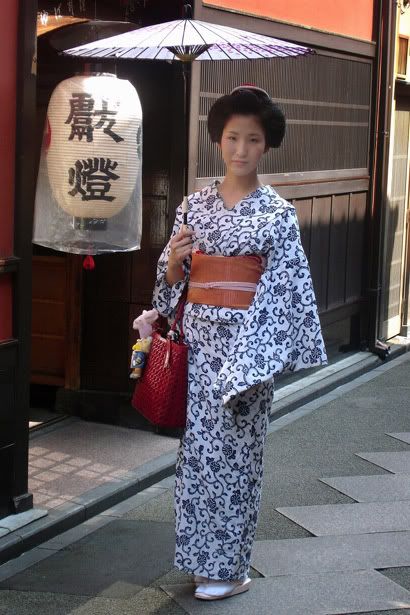
Hisano, a beautiful young maiko from Ponto-cho in her casual daytime yukata, sheilded from the scolding summer sun by a Japanese paper umbrella.

Image hosted by Photobucket.com
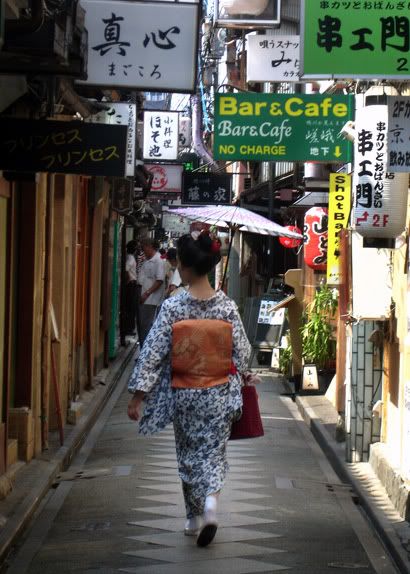
Hisano strolls along the narrow alley known as Pontocho, the second largest traditional entertainment district in Kyoto, after Gion. Running 500 meters (0.3 miles), it is bordered on the east by the Kamo river and the Takase-gawa canal to the west.

Image hosted by Photobucket.com
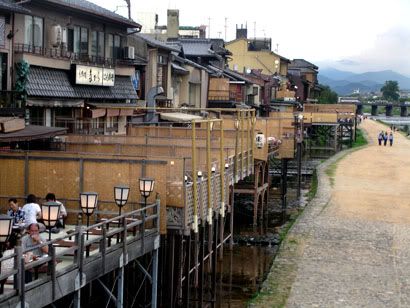
A clear sign the summer has come. More than 80 of Pontocho's restaurants, bars, and other establishments set up wooden balconies on stilts over the canal on the west bank of the Kamo River, between Nijo Street and Gojo Street.

Image hosted by Photobucket.com
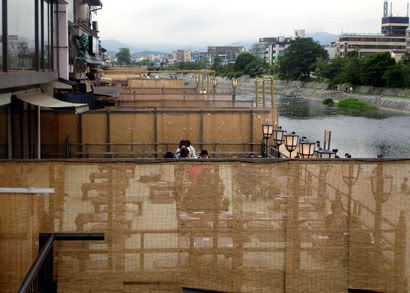
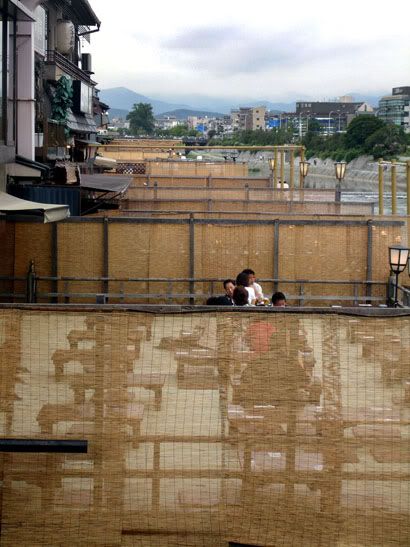
The famous Kamo River has been the backdrop of the Geisha and Maiko of Kyoto since the mid 17th century, when the first tea houses of Gion and Pontocho sprang up. Summer is the perfect chance to enjoy dinner by the cool, clear waters of the Kamagawa.

Image hosted by Photobucket.com
The mountains fade into blue as your eye follows the path of the river downstream, until its hard tell where the mountains end and the clouds begin

Image hosted by Photobucket.com
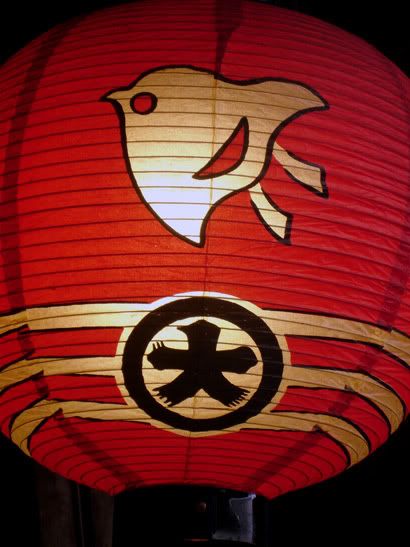
Pontocho's mon (crest) adorns the bright red lanterns that line the narrow alleyway, bringing a soft glow to magical evenings among the old buildings, illuminating ephemeral glimpses of geiko and maiko as they disappear into the night. The chidori is a small bird known as a plover, often spotted along the banks of the Kamogawa.

Tuesday, August 2, 2005

Lindsey's Farewell Fireworks: Osaka Style

Image hosted by Photobucket.com

Right about now Lindz is somewhere over Asia, on her way to the tropical paradise that is Thailand. I should be sitting next to her on the plane, reading a lonely planet guide to my Thai adventure or struggling with Thai expressions like, "Spicy, please!" but thanks to my Board of Evil (aKa Education), I am stuck in Ena, with nothing to do but blog about our fantastic farewell weekend in Osaka

Image hosted by Photobucket.com

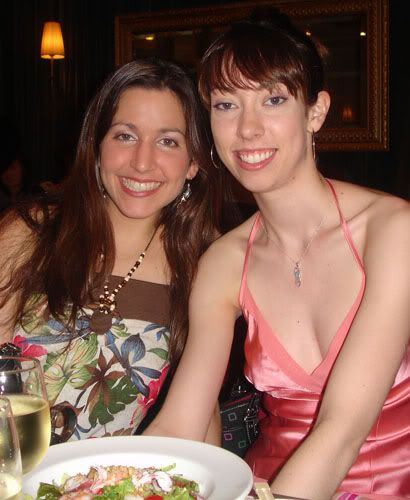
Saturday was Lindz last day at Nova, so while she struggled to get thru it I spent a rough afternoon shopping in Namba! Her farewell party was at Ninikuya (the Garlic Shop), a beautiful resturant with an eclectic menu featuring a delicous array of dishes dashed with garlic. The bathrooms are fully equipped with toothbrushes and toothpaste for all those foul breath faux paus that such a selection is destined to cause, but it was delicous! The best part about it all was that Mitsu was able to come too, and since he's on his way to Tampa Bay, Florida, for the next year, it was the last time we'd all get to party together. Even though he kept stealing my food, it was great to see him again!

Image hosted by Photobucket.com

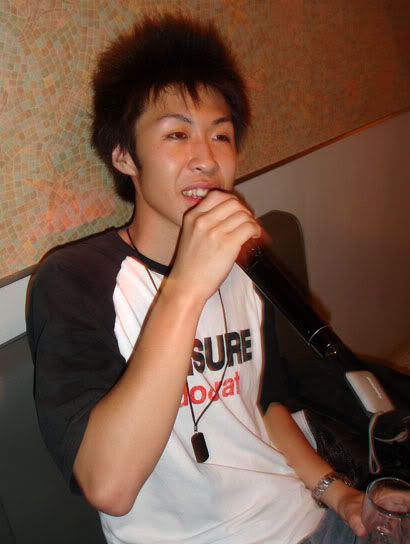
After dinner we peer pressured him to join us for Karaoke, a staple of party culture in Japan. Of course he couldn't resist the chance to hear our beautiful voices so he trekked back to Shin-Osaka with us. Highlights of the jam session included his rendition of Rakuen Baby (listen to it here: track #5) by Ripslyme and Mr.Big's I'm the One Who Wants to be With You, a cross cultural favorite! I got some pretty entertaining video of it all, if I ever figure out how to upload it...

After everyone else went to sleep we decided to watch The Beach, in honor of Lindz encroaching departure. We didnt pass out til after 6 AM! Unfortunately, I had a reservation in kyoto at 3, so we had to be up a ready to go by noon. But that's for another post!

Image hosted by Photobucket.com

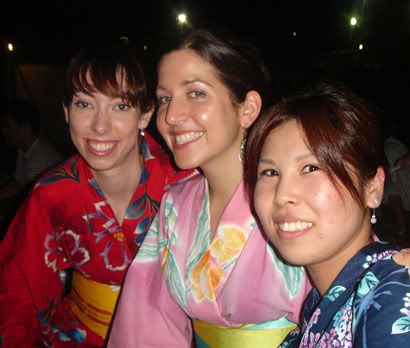
Lindz' friend Yukiyo had invited us to the PL (Perfect Liberty, a new religion in Japan) fireworks display in Tondabayashi, PL`s Holy Land. Its the largest display in the world, with over 120,000 fireworks! We headed to Yukiyo`s, where her mother and 6th grade sister struggled to dress all three of us in Yukata in time to brave the crowded trains and streets early enough to secure a good seat, which we did, 3 hours before the show began. As we walked around the crowded lot admiring yukatas, I found a few admirers myself. A Japanese man yelled out "Kawaii!" a few times before braving a "Hello!" to get my attention. "Mecha Kawaii! (Super cute)," he assured me, smiling. "Niateru! (It suits you!)." As we headed back to our seats (a plastic bag stretched out on the hot concrete of the Holy PL Parking Lot, a Peruvian man walked up to me, looked me up and down and said "Hola guapa!" Hmm...Maybe I should wear yukata more often!

Image hosted by Photobucket.com

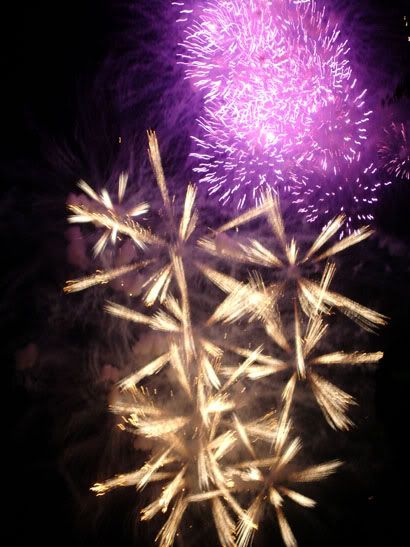
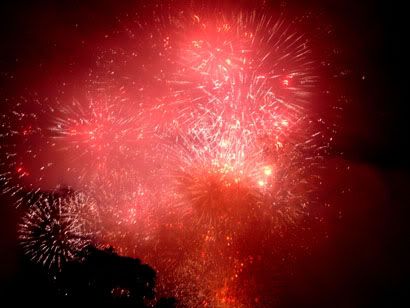
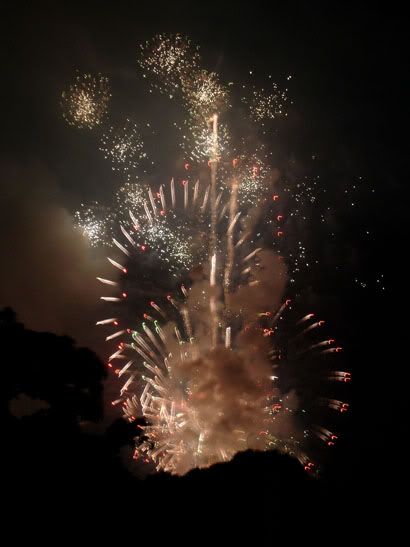
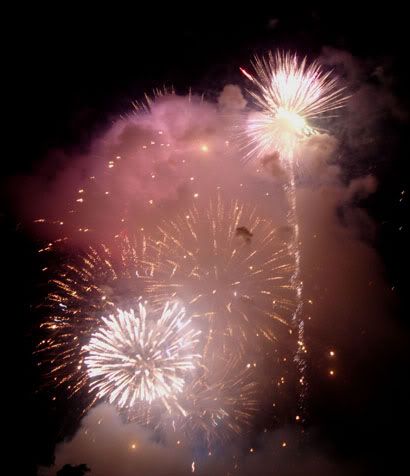
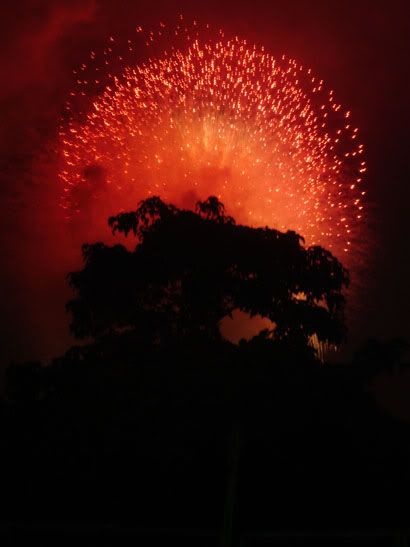
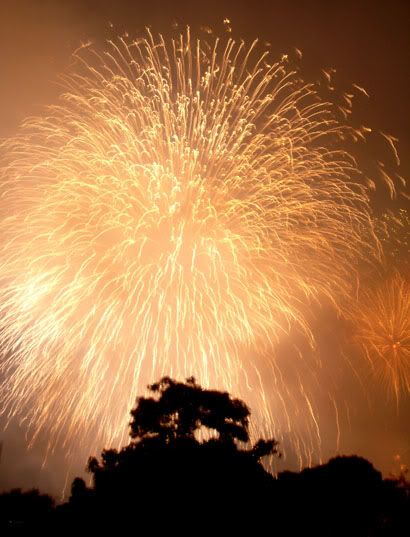
The fireworks were well worth the the wait! Its been a long time since I saw fireworks, but these were amazing. They were sending hundreds up at a time, for over and hour!

Image hosted by Photobucket.com

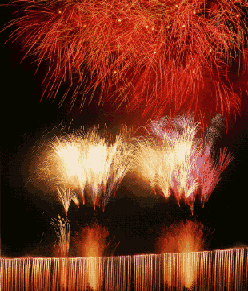
PL is the world's largest yearly display of fireworks, with over 120,000 fire flowers blooming in the stars (a typical fireworks festival will launch between 5,000 to 10,000). Highlights include "Niagara Falls", a 50 meter high, one kilometer long river of falling fire (pictured left). The grand finale, a firestorm of more than 7,000 fireworks launched at once, transforms the night sky into a burst of light, if only for a moment.


Image hosted by Photobucket.com

The music was kind of creepy- new age PL style- and probably loaded with subliminal messages to join the dark side, but we survived unconverted.


Image hosted by Photobucket.com

The finale was incredible. The sky lit up like it was broad daylight, and the sound rattled the ground beneath me and caused my heart to skip a beat. It was terrifying and breath-taking. I got video of that, too!

Image hosted by Photobucket.com

We ended the night at a sentou, or pubic bath/onsen, where we soaked the marathons of walking we had done over the weekend away.I passed out staring at a huge poster of Johnny Depp playing the piano hanging on Yukiyo's ceiling. It was after 2 AM (I had to be up by 4:30 to begin my trek back to Ena), but it was the perfect end to an amazing weekend!


Sayonara Lindsey-san! I'll miss you!